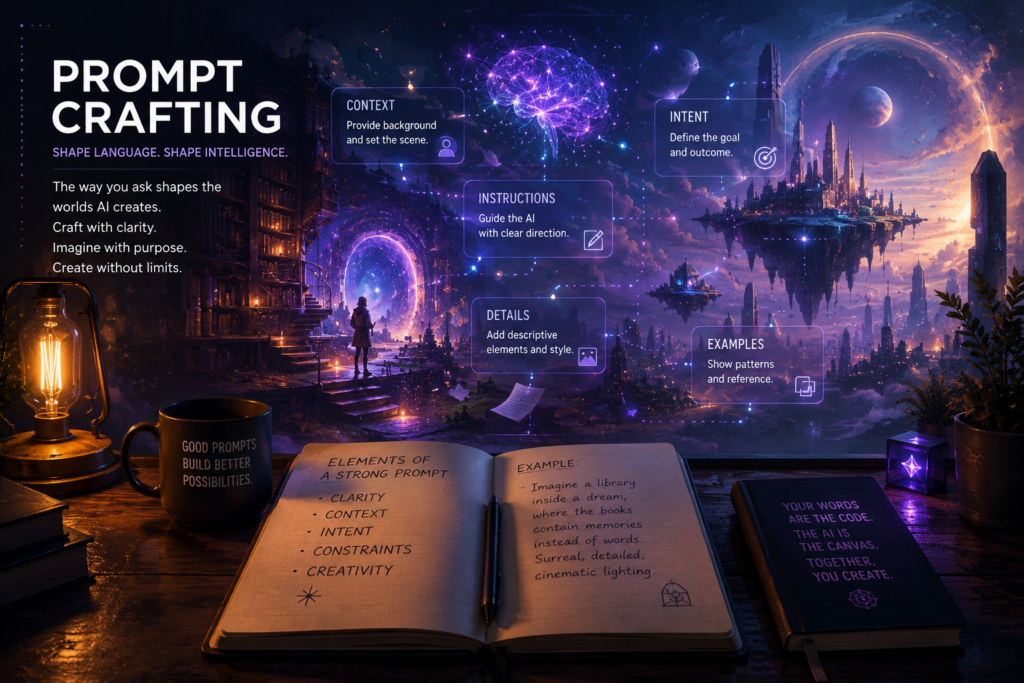
Prompt crafting is the process of translating human intention into language that artificial intelligence can meaningfully respond to.
The best prompts are not just commands. They are conversations shaped by context, tone, imagination, and clarity.
Know exactly what you want from the AI. Are you writing a story, summarizing research, creating an image, or developing an idea?
Give the AI a role, situation, or frame of reference so it can respond from the right perspective.
Guide the emotional or stylistic direction of the output. Tone changes how the same idea feels.
AI responds better when you give it a format, outline, example, or clear constraints.
Prompt crafting is iterative. Change one variable at a time and notice how the response evolves.
Strong prompting is not about using complicated language. It is about clarity, context, and intentional communication.
A vague prompt usually creates a vague response. Give the AI enough direction to understand your goal, audience, tone, and desired format.
AI responds better when it understands the situation. Context helps shape more useful, relevant, and thoughtful responses.
Prompting works best as an evolving conversation. Start rough, review the result, then refine your instructions step by step.
Enter an idea or request below, then use the framework above to shape it into a stronger prompt.